



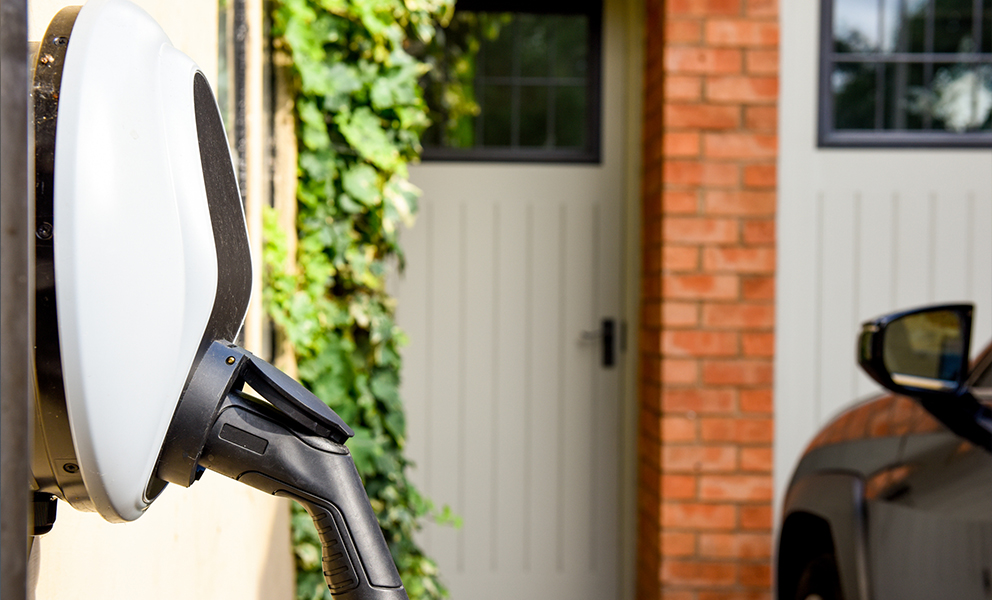

Why install a home EV charger
While it is possible to charge an electric vehicle using a standard three pin plug, it is not designed for regular high load charging. A dedicated EV charger is purpose built for vehicle charging and offers several key advantages.
Faster charging
A home EV charger typically delivers between 7 kW and 22 kW of power, compared to around 2.3 kW from a standard socket. This means faster, more predictable charging times, making overnight charging practical for everyday use.
Improved safety
EV chargers are installed on their own circuit with built in safety features such as load monitoring and fault protection. This reduces the risk of overheating and electrical faults compared to prolonged use of a domestic socket.
Convenience and control
Charging at home means your vehicle is ready when you are. Many chargers also include smart features, allowing you to schedule charging times, track usage, and integrate with off peak tariffs or renewable energy.
Types of home EV chargers
Choosing the right charger depends on your vehicle, your home’s electrical supply, and how you plan to use the charger.
7 kW chargers
7 kW chargers are the most common choice for UK homes. They work with a single phase electrical supply, which most residential properties have, and offer a good balance of charging speed and compatibility.
22 kW chargers
22 kW chargers require a three phase electrical supply, which is less common in domestic properties. Where available, they can significantly reduce charging times, but not all vehicles support charging at this rate.
Smart EV chargers
Smart chargers connect to your home network and allow you to manage charging through an app. Features can include scheduled charging, energy monitoring, and integration with solar panels. Smart chargers are now standard for most new installations.
You can learn more about charger options and installation requirements on our EV charger installation page.
How much does home EV charger installation cost
The cost of installing a home EV charger depends on several factors, including the charger model, cable run length, and whether any upgrades are required to your electrical supply.
As a general guide, most standard home installations fall within a predictable range. Costs can increase if your consumer unit needs upgrading, if the charger is installed far from the main supply, or if groundworks are required.
Although upfront costs are a consideration, charging at home is usually significantly cheaper than relying on public charging networks, particularly when combined with smart tariffs or solar generation.
Are there grants available for EV chargers
Government support for home EV charging has changed over time. While the main home charger grant has ended for owner occupiers, support is still available in certain cases, such as flats, rental properties, and workplaces.
Even without a grant, falling equipment costs and improved efficiency mean home charging remains a strong long term investment, especially when paired with solar panels.
EV charging and solar panels
One of the biggest advantages of installing a home EV charger is the ability to charge your vehicle using electricity generated by your solar panels. This can significantly reduce running costs and carbon emissions.
When solar panels generate electricity during the day, that power can be used to charge your vehicle directly or stored in a battery for later use. This is particularly useful for households that work from home or have flexible charging schedules.
If you are considering solar, or already have panels installed, our solar panels for homes service explains how systems are designed to support EV charging.
Adding battery storage to your EV setup
Battery storage can further enhance the benefits of home EV charging. A battery allows you to store excess solar electricity and use it later to charge your vehicle in the evening or overnight.
This reduces reliance on grid electricity and helps maximise the value of the energy you generate. For households with both solar and an EV, battery storage often provides a noticeable improvement in flexibility and savings.
Learn more about this option on our battery storage page.
Installation requirements and planning
Before installing an EV charger, a professional assessment is carried out to ensure your electrical system can safely support it.
- Checking the capacity of your existing supply.
- Assessing your consumer unit and protective devices.
- Planning the cable route and charger location.
- Considering future needs such as solar or battery upgrades.
Proper planning ensures your charger is safe, compliant, and future ready.
Maintenance and ongoing support
EV chargers require minimal maintenance, but professional installation and periodic checks help ensure long term reliability. If your charger is part of a wider solar setup, maintaining all components together helps protect overall system performance.
We also offer solar panel maintenance services to support households using renewable energy for vehicle charging.
Is a home EV charger worth it
For most EV owners, the answer is yes. Home charging is more convenient, more cost effective, and more reliable than relying on public infrastructure alone. It also allows you to take advantage of smart tariffs and renewable energy.
As EV adoption continues to grow, installing a charger now can also future proof your home and make it more attractive to future buyers.
Getting started
If you are considering a home EV charger, the best first step is a professional assessment. This ensures the charger is correctly specified and installed with your home’s electrical system in mind.
You can request advice or a quote through our contact us page. We can also advise on combining EV charging with solar panels and battery storage for a complete home energy solution.
Final thoughts
Home EV charger installation is no longer a niche upgrade. It is a practical step for homeowners looking to reduce running costs, improve convenience, and prepare for an electric future. With the right planning and professional installation, your charger can become a key part of a smarter, more efficient home energy system.
Explore our services: EV charger installation, solar panels, battery storage, and commercial solar.